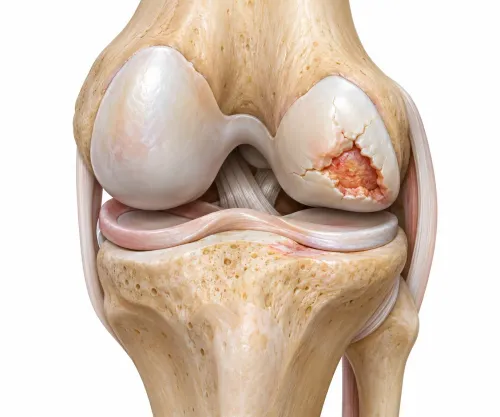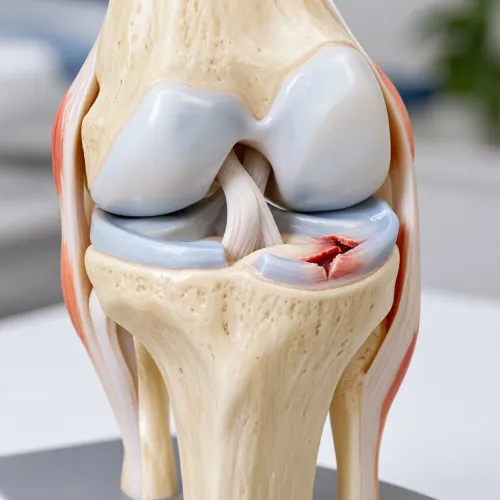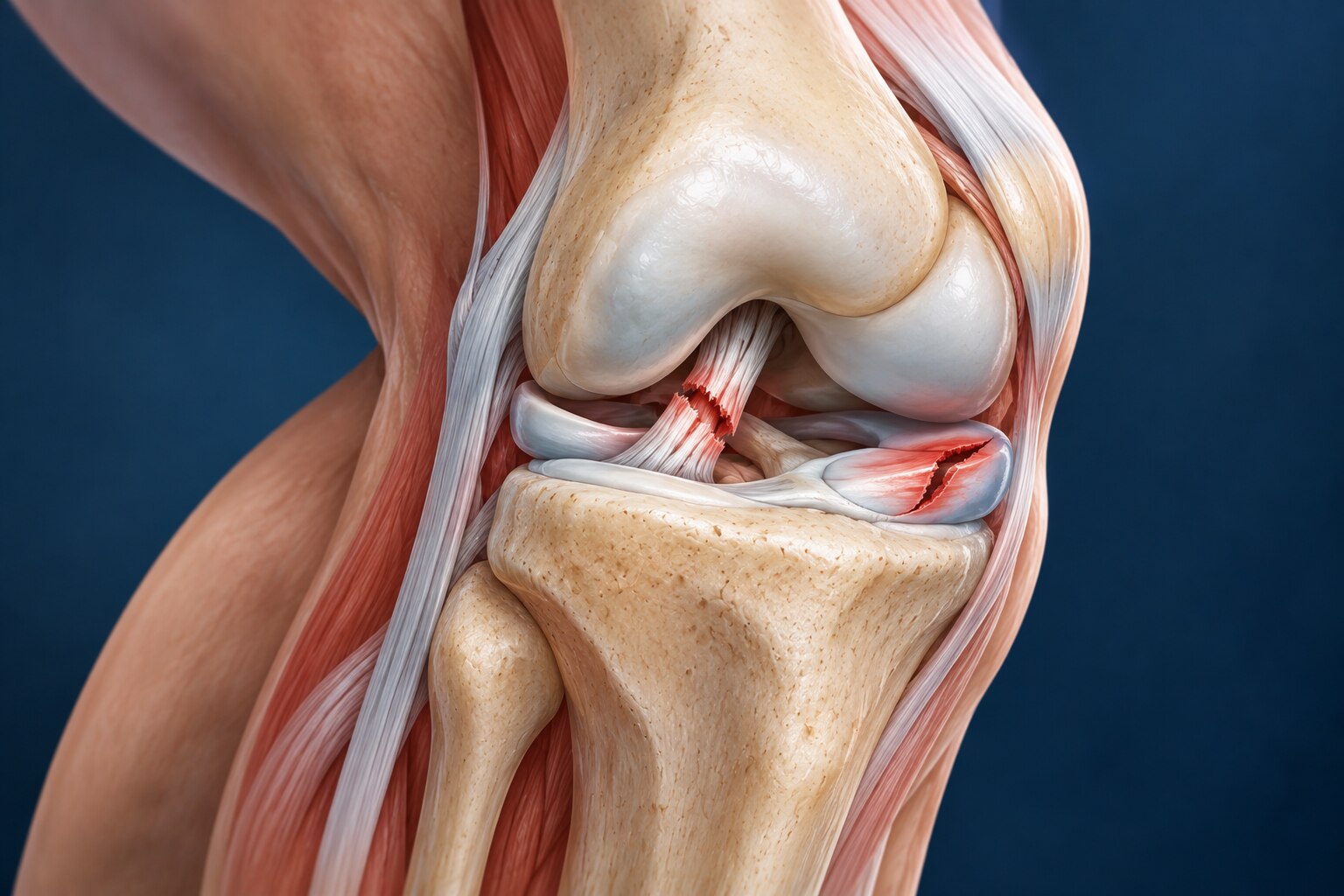
Swelling, locking, giving way, and loss of motion can follow several different knee injuries, and the same symptom does not identify the damaged structure. You will learn which patterns need urgent assessment, how clinicians confirm the diagnosis, and when rehabilitation, repair, partial tissue removal, or reconstruction makes sense.
Key takeaways
- Rapid swelling after injury warrants prompt assessment for internal knee damage.
- Instability during cutting often points to an ACL or other ligament injury.
- Rehabilitation can suit selected ligament tears without reconstruction.
- Meniscus treatment depends on tear location, symptoms, tissue quality, and repair potential.
Which knee injury matches your symptoms—and which signs need urgent care?
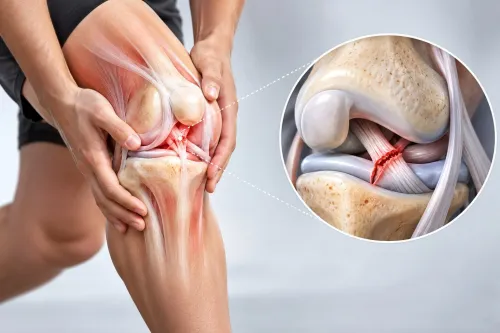
Rapid swelling, instability, or locking can point to different knee structures. ACL injury symptoms often begin with swelling within hours, followed by giving way during cutting or changing direction and difficulty trusting the knee.
PCL injury symptoms often follow a blow to the front of a bent knee, causing pain at the back and a sensation that the shin sags backward.
| Injury | Common symptoms | Useful clue |
|---|---|---|
| ACL | Rapid swelling, giving way, instability | Cutting or pivoting feels unsafe |
| PCL | Posterior pain, stiffness, backward sagging sensation | Direct impact to a bent knee |
| MCL tear | Inner-side pain, tenderness, looseness | Valgus, or inward, stress hurts |
| LCL | Outer-side pain, tenderness, side-to-side looseness | Varus, or outward, stress hurts |
| Meniscus | Joint-line pain, catching, painful squatting, limited extension | Twisting or deep bending triggers symptoms |
| Combined injury | Marked swelling, instability, restricted motion | More than one pattern appears together |
Understanding LCL tear symptoms differences from meniscus tear symptoms starts with location: an LCL tear causes outer-side tenderness and looseness, while a meniscus tear more often causes joint-line pain, catching, or painful squatting. Ordinary swelling and soreness after injury still deserve assessment if motion remains limited.
Seek urgent care after a suspected knee dislocation, major trauma that prevents weight-bearing, numbness, or a cold or pale foot; nerves and blood vessels may be threatened. A true locked knee, where a displaced meniscal fragment prevents normal straightening, needs prompt orthopaedic assessment.
Severe swelling, major loss of motion, or suspected combined injury also warrants timely evaluation.
How doctors confirm the damaged structure before recommending surgery
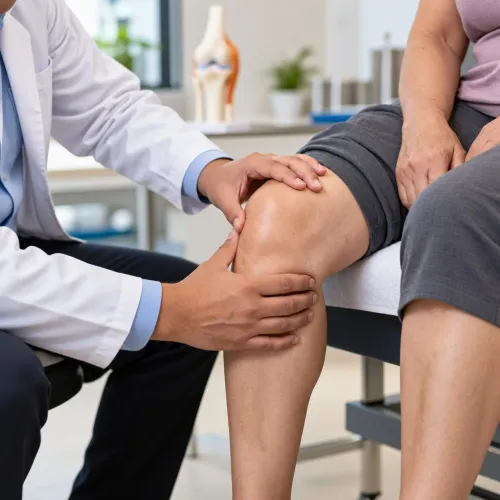
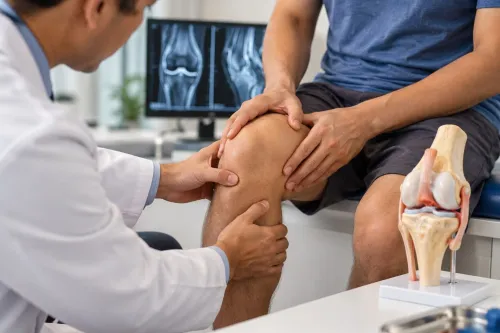
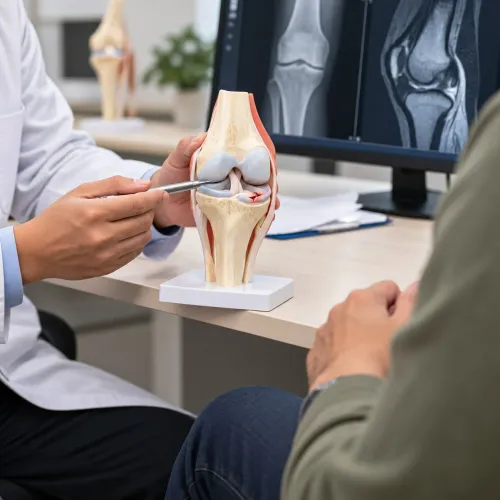
Doctors do not recommend surgery from a knee MRI alone. They combine the injury story, knee injury physical examination, X-rays, and MRI to identify the damaged structure and confirm that it explains your symptoms.
1. The clinician records how the injury happened, when swelling appeared, and whether you now have pain, locking, giving way, or restricted movement. Examination checks swelling, range of motion, joint-line tenderness, ligament laxity, patellar movement, and the knee’s response to Lachman, pivot-shift, posterior drawer, varus, and valgus stress tests.
2. A knee X-ray identifies fracture, avulsion, dislocation, alignment changes, and arthritis. It does not directly show a meniscus or most ligament tears, so a normal X-ray cannot rule out significant soft-tissue damage.
3. A knee MRI can show ACL, PCL, MCL, and LCL injuries, meniscal tears, cartilage damage, bone bruising, and occult injury patterns. The radiologist’s findings must match the painful area, instability, locking, and examination results.
4. The assessment records whether the injury is recent or chronic, along with tissue quality, limb alignment, cartilage condition, and associated cartilage damage. These details affect whether repair, reconstruction, rehabilitation, or no operation is appropriate.
A meniscal signal or tear on MRI does not prove it causes pain, particularly in an older knee with osteoarthritis. The scan is evidence, not the diagnosis.
When can a ligament tear heal with rehabilitation instead of reconstruction?
Rehabilitation can be enough when the knee remains functionally stable, symptoms improve, and your activities do not repeatedly stress the torn ligament. The decision depends on the ligament, tear location, laxity, and associated injuries.
| Ligament | Structured nonoperative care | When surgery becomes more relevant |
|---|---|---|
| MCL | Activity modification, early controlled motion, strengthening, and MCL brace rehabilitation when needed | Persistent valgus laxity, a displaced or avulsed ligament, or combined instability |
| LCL | Bracing, protected activity, motion work, and strengthening when alignment and stability are acceptable | Persistent varus laxity, an avulsion, posterolateral-corner injury, or combined ligament damage |
| PCL | PCL nonoperative treatment with quadriceps-focused rehabilitation when the knee is acceptably stable and symptoms improve | Ongoing posterior instability, high-grade functional symptoms, or combined ligament injury |
| ACL | Rehabilitation can suit a stable knee, lower physical demands, or no plan to return to pivoting sport | ACL reconstruction indications include repeated giving-way, a goal of cutting or pivoting sport, or meniscal, cartilage, or other ligament damage |
Primary ligament repair suits a fresh tear with usable tissue attached in a repairable location, such as a selected avulsion. Reconstruction replaces the ligament with a graft when direct repair is unlikely to hold.
If an acute isolated ACL tear needs surgery, AAOS guidance supports considering reconstruction within three months because longer delay can increase the risk of additional meniscal or cartilage injury. That timing does not mean every ACL tear requires immediate reconstruction.
When should a meniscus be repaired, trimmed, or treated without surgery?
A repairable traumatic tear usually deserves meniscus repair, because the meniscus spreads load and supports knee stability. The decision depends on several factors:
1. Tear location and pattern: Tears near the outer vascular zone, including suitable peripheral patterns, have better healing potential than central white-zone tears. A repair requires longer, more restricted rehabilitation and can still fail.
2. Symptoms and demands: A displaced bucket-handle tear causing a locked knee, with a fragment blocking extension, needs prompt assessment. Intermittent clicking without true locking is different. Sport, work demands, age, tissue quality, and the goal of returning to pivoting activity also shape the choice.
3. Tissue preservation: A partial meniscectomy removes only unstable, irreparable tissue and often allows faster early recovery. Removing load-bearing tissue increases later joint stress, especially when a larger portion is sacrificed, so trimming is not a routine answer to every MRI tear.
4. Root and degenerative tears: A meniscal root tear can behave like near-total meniscus loss. Repair candidacy depends on cartilage damage, limb alignment, body weight, chronicity, age, and tissue quality. With degenerative tears and osteoarthritis, exercise therapy and other nonoperative care usually come before arthroscopy.
Pain alone, age-related fraying, or an incidental MRI tear does not establish a surgical indication. The scan must match your symptoms and examination.
What happens during sports injury knee surgery, and how are combined injuries handled?
The sports injury knee surgery process varies because the operation must match the damaged tissue, symptoms, stability, and activity goals—not the MRI label alone. Arthroscopy uses a camera through small portals to inspect the meniscus, cartilage, cruciate ligaments, and joint surfaces. The surgeon then repairs or removes only tissue that matches the examination and symptoms.
1. Anaesthesia and pain control are planned with the anaesthesia team. During arthroscopy anaesthesia, the team selects the appropriate approach after reviewing your health, procedure, and recovery needs.
2. ACL graft selection considers age, sport, work demands, previous surgery, and discussion with your surgeon. Options include patellar tendon, hamstring, or quadriceps tendon autograft; an allograft suits selected situations.
In tunnel placement ACL reconstruction, the surgeon drills femoral and tibial tunnels at the native ligament footprints, passes the graft through them, and secures it with fixation devices.
3. A meniscus repair uses sutures or repair devices to preserve load-bearing tissue. A partial meniscectomy removes only an unstable, irreparable fragment, which can speed early recovery but sacrifices tissue and increases later joint-loading consequences.
4. Combined knee injuries need a sequence that protects healing and restores stability. With ACL-meniscus injuries, untreated instability can threaten a meniscal repair; cartilage damage, collateral-ligament injury, alignment, chronicity, and tissue quality change the order and choice of treatment.
Rehabilitation tracks swelling, motion, quadriceps strength, hop testing, and movement quality rather than a date alone. Dr Ronak Kothari can help patients in Mumbai weigh these choices against examination findings, imaging, activity goals, and recovery demands.
Related service
Knee Arthroscopy & Sports Medicine Knee Arthroscopy & Sports Medicine Dr. Ronak Kothari, a skilled Orthopaedic Surgeon, specializes in Knee Arthroscopy and Sports Medicine, offering advanced, minimally invasive... View service → |
Frequently asked questions
Which knee injury matches swelling, instability, or locking?
Rapid swelling within hours can follow an ACL injury. Giving way during cutting suggests instability, while locking raises concern about a displaced meniscus tear or another mechanical blockage.
How do doctors confirm which knee structure is damaged?
Doctors combine your injury history with physical tests, knee movement assessment, X-rays to check bone injury, and MRI when they need detailed images of ligaments, menisci, cartilage, or other soft tissues.
Can a ligament tear heal with rehabilitation instead of reconstruction?
Some partial tears and selected complete tears can be managed with structured rehabilitation when the knee remains stable and your activity goals do not require reconstruction. Persistent giving way changes the decision.
When should a meniscus tear be repaired, trimmed, or treated without surgery?
Treatment depends on whether the tear causes locking, where it sits, its blood supply, tissue quality, and your symptoms. Stable symptoms may improve without surgery; repair preserves tissue, while trimming removes only unstable damaged tissue.
What happens during sports injury knee surgery?
Surgeons use arthroscopy through small incisions to inspect and treat the knee. They may reconstruct a torn ligament, repair or trim the meniscus, and address combined injuries during the same operation when appropriate.