Knee pain and stiffness can come from cartilage loss, inflammation, muscle weakness, or a condition that needs a different treatment. By matching the cause and severity of your symptoms to exercise, medicines, injections, or surgery, you can make a safer plan for reducing pain and protecting mobility.
Key takeaways
- Use exercise, weight management, and activity changes before invasive treatment.
- Check kidney, stomach, heart, and blood-pressure risks before taking anti-inflammatory medicines.
- Choose low-impact exercise and reduce intensity when pain worsens during or after activity.
- Discuss injections or surgery when persistent symptoms limit sleep, work, or daily movement.
Why does arthritis make your knee hurt and stiff, and could another condition be responsible?
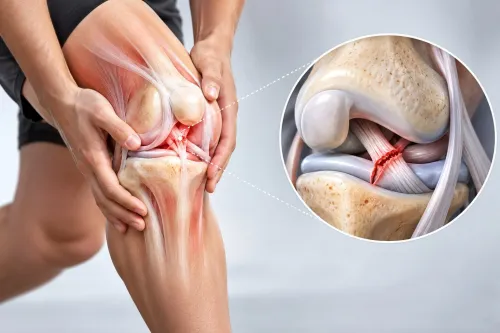
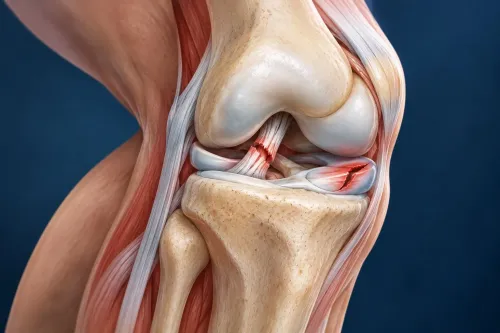
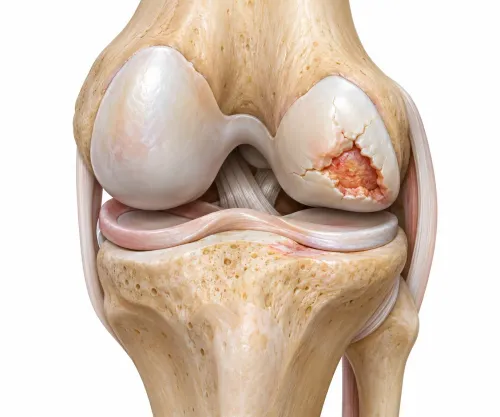
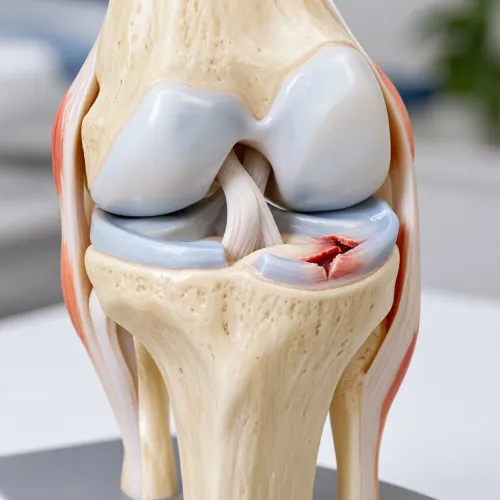
Osteoarthritis usually develops as cartilage loss reduces the smooth cushioning between the thighbone and shinbone. The joint then loads unevenly, producing knee arthritis pain during walking, stairs, or standing. Bone changes, including extra bone growths and hardening beneath the cartilage, further alter movement.
Inflammation also matters: synovitis in the knee causes fluid, warmth, and swelling, which explain much of the knee stiffness after rest. Pain inhibits the quadriceps, so the thigh muscle weakens; weakness increases joint loading and instability. Swelling and pain reduce range of motion, making it harder to fully bend or straighten the knee.
Other conditions can mimic osteoarthritis, but their patterns differ:
| Condition | Clues that point away from ordinary osteoarthritis |
|---|---|
| Osteoarthritis | Pain worsens with use, stiffness after rest lasts under about 30 minutes, and symptoms usually centre on one or both weight-bearing knees. |
| Rheumatoid arthritis | Persistent morning stiffness, warmth, and swelling in several joints, often symmetrically, with fatigue. |
| Gout | Sudden, severe pain, redness, and marked tenderness, often developing over hours. |
| Post-traumatic arthritis | Symptoms begin after a fracture, ligament injury, meniscal tear, or previous knee operation. |
| Infection | Rapidly worsening pain, hot swollen joint, fever, or feeling acutely unwell; seek urgent medical assessment. |
| Hip or spine disease | Hip arthritis can cause groin or knee pain, while a pinched spinal nerve can cause burning pain, tingling, or weakness down the leg. |
What should you try first before injections or surgery?
Start with the least invasive option that improves function, then add treatments only when symptoms continue. This knee arthritis treatment ladder is adjusted to your pain, strength, balance, work, and other health conditions.
- Modify aggravating activities rather than stopping movement: reduce stairs, kneeling, deep squats, or impact exercise temporarily, then rebuild tolerance.
- Address weight when relevant. Weight loss and knee osteoarthritis: even modest loss can reduce load and improve walking, especially when combined with dietary change and exercise.
- Begin physiotherapy for joint movement, pacing, gait, and muscle control.
- Prioritise quadriceps strengthening, alongside hip and calf exercises, because weak muscles increase difficulty with stairs and rising from a chair.
- Use a walking aid for knee arthritis only when instability or abnormal loading affects movement. A stick, frame, or hinged brace that does not improve function can cause discomfort and discourage activity.
- Try a topical NSAID such as diclofenac for local pain relief. It exposes the body to less medicine than tablets, but follow the product instructions and protect broken skin.
- Consider an oral pain medicine only after reviewing stomach, kidney, liver, blood-pressure, heart, and anticoagulant risks with a clinician. Oral NSAIDs often require stomach protection.
Review progress after a planned trial rather than judging treatment after one difficult day. If pain, stiffness, deformity, or loss of function still limits quality of life despite optimised non-surgical care, discuss injection or joint-replacement referral; age, body weight, smoking, or another medical condition alone should not block that conversation.
Which medicines, heat, and cold treatments fit your health risks?
Topical diclofenac is a sensible first medicine for many people with knee osteoarthritis because it delivers anti-inflammatory treatment near the joint with less whole-body exposure than tablets. Do not apply it to broken skin, and ask a clinician or pharmacist before use if you take anticoagulants.
| Option | Potential fit | Main health concerns |
|---|---|---|
| Topical diclofenac | Local relief with lower systemic exposure | Skin irritation; caution with anticoagulants, NSAID allergy, or asthma triggered by NSAIDs |
| Oral NSAIDs for knee pain | Short courses when topical treatment is inadequate | Stomach ulcer or bleeding, kidney injury, liver problems, raised blood pressure, heart attack or stroke risk; interactions with anticoagulants |
| Paracetamol for osteoarthritis | An alternative when other medicines are unsuitable; often gives limited relief alone | Liver damage from excess doses, alcohol, or duplicate cold-and-flu products |
| Duloxetine for chronic pain | A prescription option when persistent pain affects function or sleep | Nausea, dizziness, blood-pressure changes, liver injury, and interactions with antidepressants or anticoagulants |
A clinician should check your kidney function, blood pressure, ulcer history, cardiovascular disease, liver health, and medicines before recommending oral NSAIDs or duloxetine. Gastroprotection such as a proton-pump inhibitor is often prescribed with an oral NSAID when stomach risk is significant; do not self-prescribe or combine NSAIDs.
Use a warm pack or shower for 15–20 minutes before movement to ease stiffness. After activity, or when swelling flares, use a cold pack wrapped in a towel for 10–15 minutes. Keep heat and cold off numb, broken, or poorly circulated skin, check the skin afterwards, and never sleep with either treatment applied.
How can you exercise without increasing knee pain?
Keep exercise pain from escalating by choosing a tolerable load, moving regularly, and reducing the workload when swelling or pain lasts into the following day. Physiotherapy for knee arthritis usually combines range-of-motion exercises with hip and quadriceps strengthening, because weak supporting muscles increase the strain on the joint.
Do not force a stiff knee through sharp pain.
Pacing matters: break activity into shorter sessions, alternate exercise with rest, and increase duration or resistance one step at a time. A physiotherapist can adjust the plan if pain, instability, or limited movement prevents safe progress.
| Activity | Why it helps | What to watch for |
|---|---|---|
| Cycling | Builds aerobic fitness and leg strength with limited impact | Raise the seat if deep bending hurts; begin with low resistance |
| Swimming | Supports body weight while allowing whole-body movement | Avoid forceful breaststroke kicking if it irritates the knee |
| Water exercise | Warm water reduces loading and makes movement easier | Use a pool depth and pace that do not increase swelling afterwards |
| Level-ground walking | Improves endurance and everyday function | Choose even surfaces; shorten the walk if limping begins |
| Running, jumping, or deep squats | Creates higher impact or compressive loading | Replace them when they trigger pain, swelling, or next-day stiffness |
Low-impact exercise is not a lesser workout. Cycling, swimming and water exercise can improve fitness while giving an irritable knee more control than impact-heavy training. The best option is the one you can repeat consistently without a symptom flare.
When do injections or surgery make sense for persistent symptoms?
Injections make sense when pain remains despite exercise, physiotherapy, medicines, and activity changes, and the diagnosis is clear. They aim to reduce symptoms, not rebuild lost cartilage or guarantee that surgery will be avoided.
- A corticosteroid knee injection can reduce inflammatory pain for a short period, but repeated injections may damage cartilage and raise blood glucose temporarily.
- A hyaluronic acid injection has inconsistent results; the AAOS does not recommend routine viscosupplementation because average benefit is not clinically meaningful.
- A platelet-rich plasma knee injection may help selected patients, but preparation methods and study results vary, so its benefit is not predictable and cost or access may not be covered.
Every injection carries infection, bleeding, post-injection flare, and temporary worsening risks. Your clinician must also check anticoagulants, diabetes, skin infection, and whether the pain comes from another source.
Arthroscopic lavage is not an osteoarthritis treatment: trials found no important advantage over well-delivered non-surgical care. Arthroscopy has a different role for a clearly defined locked knee caused by a loose body.
A knee replacement decision becomes reasonable when non-surgical treatment fails and symptoms substantially restrict your life:
- Persistent pain or stiffness
- Progressive deformity
- Difficulty walking, sleeping, working, or managing daily tasks
- Loss of function despite an appropriate treatment trial
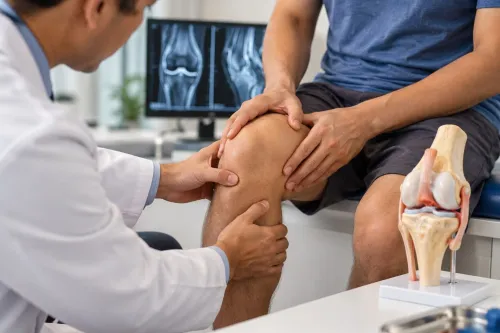
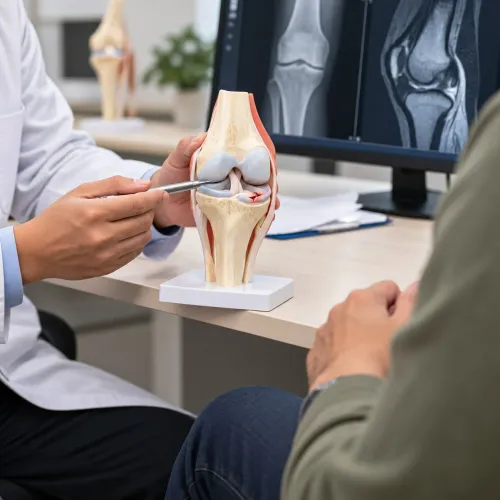
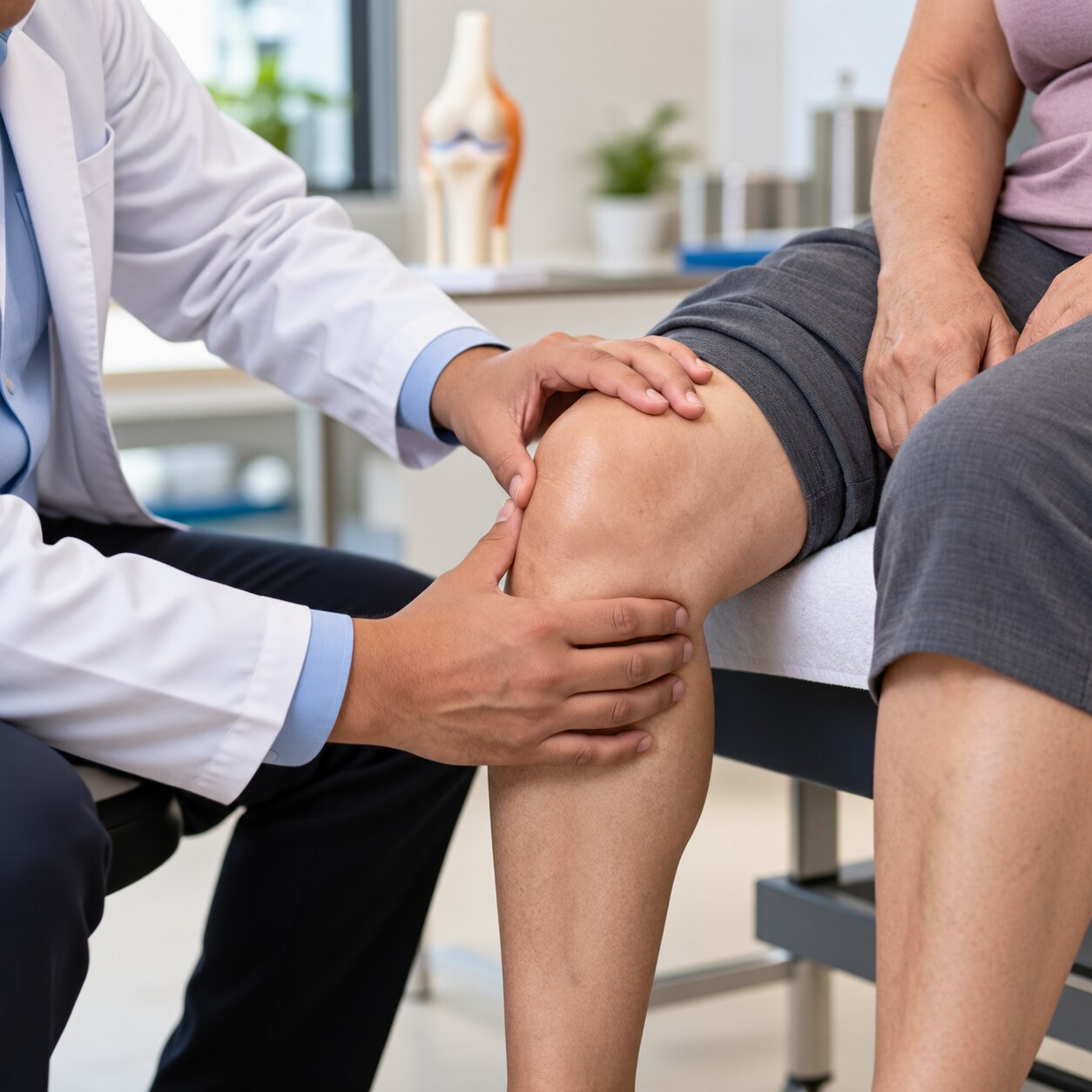
Dr Ronak Kothari’s knee-focused assessment can test the diagnosis, preoperative range of motion, rehabilitation needs, and individual surgical risks. A replacement often improves pain and function, but it does not reliably create motion the knee never had.
Related services
Knee Preservation Procedures Dr. Ronak Kothari, an experienced Orthopaedic Surgeon, specializes in Knee Preservation Procedures aimed at maintaining the natural knee joint for as... View service → |
Knee Arthroscopy & Sports Medicine Knee Arthroscopy & Sports Medicine Dr. Ronak Kothari, a skilled Orthopaedic Surgeon, specializes in Knee Arthroscopy and Sports Medicine, offering advanced, minimally invasive... View service → |
Frequently asked questions
Why does knee arthritis cause pain and stiffness?
Cartilage loss reduces smooth cushioning between the thighbone and shinbone. Uneven loading, bone growths, and hardening beneath cartilage can make movement painful and stiff.
What should you try before injections or surgery?
Start with guided exercise, strength training, activity modification, weight management when relevant, and appropriate pain relief before considering invasive options.
Which medicines, heat, and cold treatments fit your health risks?
Your clinician should match pain medicines to kidney, stomach, heart, blood-pressure, and other risks. Use heat for stiffness and cold after activity-related swelling.
How can you exercise without increasing knee pain?
Choose low-impact activities such as cycling, swimming, walking on level ground, and strengthening exercises. Reduce intensity when pain persists or swelling increases.
When do injections or surgery make sense for knee arthritis?
Consider them when persistent pain, stiffness, or limited movement continues despite non-surgical care and interferes with sleep, work, or daily activities.
Related services
Partial Knee Replacement Dr. Ronak Kothari, a proficient Orthopaedic Surgeon, offers advanced Partial Knee Replacement (Unicompartmental Knee Replacement) procedures designed... View service → |
Knee Replacement Surgery Knee replacement surgery, or knee arthroplasty, is a procedure to replace a damaged knee joint with an artificial implant made of metal and plastic. View service → |
Robotic Joint Replacement Dr. Ronak Kothari, a leading Orthopaedic Surgeon, specializes in Robotic Joint Replacement Surgery, offering state-of-the-art precision and enhanced... View service → |
General Consultation ₹1000 General Consultation |